
Mark Smith
· 4 min read
The project economy looks like the movies
Work is shifting from jobs to projects. Like filmmaking, teams assemble for a clear outcome, deliver, then disband.
Watch the credits at the end of a film. Specialists come together for one production, deliver, then move on. That is where knowledge work is heading. Teams will be hired for outcomes, not headcount. Careers will compound through credits and networks, not tenure.
What’s changing#
Employers are organising around skills and measurable outcomes. Let’s look at insights from recent reports:
- Microsoft’s latest Work Trend Index draws on 31,000 people, 31 countries and Microsoft 365 telemetry, and identifies a shift to skills-first, AI-enabled work patterns (Microsoft WorkLab, Work Trend Index hub).
- The World Economic Forum survey of employers representing 14 million+ workers found that major workforce changes are planned, with jobs and skills evolving quickly (WEF Future of Jobs 2025).
- LinkedIn’s data shows skills-first hiring can expand talent pools up to ~10x and that ~70% of the skills used in most jobs will change by 2030 (LinkedIn Economic Graph, Work Change Report 2025).
Why the movie industry is the template#
- Studios → people and organisations needing something created. Fund outcomes.
- Producers and directors → product owners and solution architects. Define scope, budget, and vision.
- Casting → talent sourcing. Platforms that match skills to projects. LinkedIn, as well as others.
- Credits → portfolios. Careers built on shipped work with metrics and references. (I plan to write more on this soon.)
- Residuals → outcomes-based pay. This needs a lot more thought, but it will depend on your portfolio and personal network.
- Hollywood careers → networked paths. Evidence from film labour markets (AJS study).
Why does this accelerate now?#
- AI as capacity. Leaders are redesigning work so people and AI operate as a team (Microsoft WorkLab, follow-up analysis).
- Skills-first economics. Skills-based search widens candidate pools and increases mobility (LinkedIn skills-first).
- Market signals. “AI-literate” now appears across job ads, technical and non-technical.
- Policy and protections. Global bodies are drafting standards for platform-mediated work, recognising its scale and risks (ILO standard-setting, draft conclusions; overview of Digital labour platforms). Human Rights Watch documents the prevalence and pitfalls of gig work in the US (HRW report).
What this means for you#
Permanent roles will still exist, but there will be a growing number of people taking on project-based work. Expect shorter cycles, clearer outcomes, and public proof of work. Your edge comes from a portable skills stack, verifiable credits, and the ability to drop into a team and deliver fast.
The skills to build now#
- Outcome portfolio
Publish a portfolio that shows the problem, your role, actions, and measurable results for each project. Treat it like a showreel. - AI fluency
Design safe, measurable AI-assisted workflows. Show how you automated and the time or cost you saved. Employers now look for “AI-literate” candidates across functions. - Skills-first signalling
Make your skills machine-readable (Think AI recruitment) and mapped to target roles. Align with skills taxonomies used by marketplaces and HR tech. - Project hygiene: the 4Ts
Always clarify time, task, team, and transition. Define exit criteria and handover up front. - Collaboration under pressure
Operate with short feedback loops. Keep decisions, risks, and next actions visible. - Commercial literacy
Understand scopes, change orders, IP, confidentiality, usage rights, and warranties, and price for outcomes where sensible. - Measurement and narrative
Tie your contribution to live metrics. Tell the story in four beats: baseline, intervention, result, next step. - Network maintenance
Curate a lightweight network by skill and reliability. After each project, request a one-line, attributable reference. - Ethics, privacy, and compliance
Build simple checklists for data handling, accessibility, and bias. Apply them to every project. - Learning velocity
Maintain a tight learning plan aligned with pipeline demand. Drop what you will not use within 120 days.
30-day actions#
- Ship a portfolio with your three strongest credits.
- Rewrite your CV to a skills-first format with project metrics (skills-first guide).
- Document one or more AI-assisted business processes/workflows with before-and-after numbers (practical tips).
- Create a reusable one-page project charter using the 4Ts (background).
- Ask three collaborators for a two-sentence reference you can quote.
Copilot-ready prompts#
Use these prompts in Microsoft 365 Copilot or your preferred tool.
Portfolio credit builder
“Turn the notes below into a 150-word project credit; structure: problem, role, actions, metrics, impact, link. Make metrics auditable. Notes: .”
Skills-first CV mapper
“From these credits, extract skills using common taxonomies. Map each skill to matching roles and list gaps to close in 120 days. Data: ”
Work is shifting to production. Portfolios beat positions, credits beat tenure. Build your showreel, tune your skills, and measure outcomes. When the next production starts, will your name be on the call sheet?

Mark Smith
Principal AI Counsel · Microsoft AI MVP
Helping people build practical AI skill in the Intelligence Age.
More from nz365guy

What if every marae hosted a piece of the cloud?
A thought experiment in Māori data sovereignty: locally owned micro data centres that return skills, resilience, and a dividend to marae.
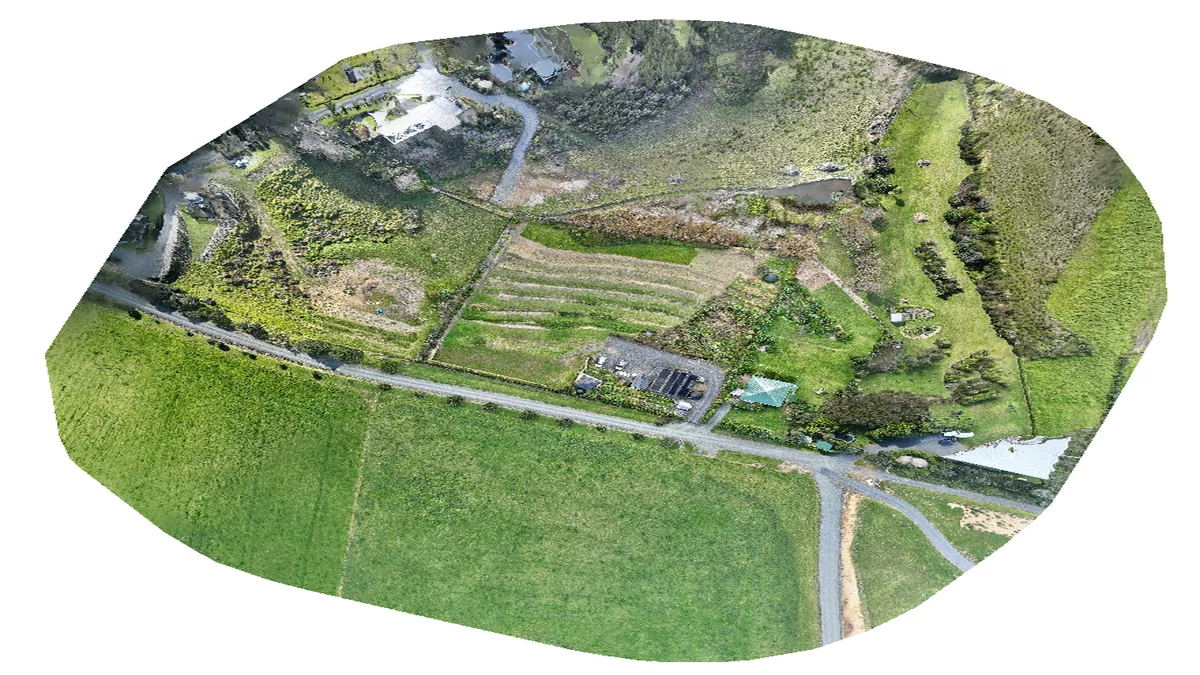
An Azure photogrammetry pipeline for less than two coffees
Phase 2 of my property digital twin turns 743 drone photos into maps and models on an Azure VM that exists as billable compute for about four hours a month.

AI checks every mission file before my drone flies
My consumer Mavic 3 has no SDK, so repeatable survey flights depend on mission files. An AI inspection caught unsafe defaults and a 22.88-metre altitude error before...
Discussion
Comments
Loading the discussion for this post.
Leave a comment
Your email stays private. If it matches a Gravatar account, your public avatar can appear after the comment is approved.