
Mark Smith
· 1 min read
5 Core Principles of Design Thinking
Why is Design Thinking important? It's all about taking a human-centred approach, understanding, and empathising with, the people who will use the technology we...
This post was originally published in 2024. Some details may have changed since then.
Why is Design Thinking important?
It's all about taking a human-centred
approach, understanding, and empathising with, the people who will use the technology we implement.
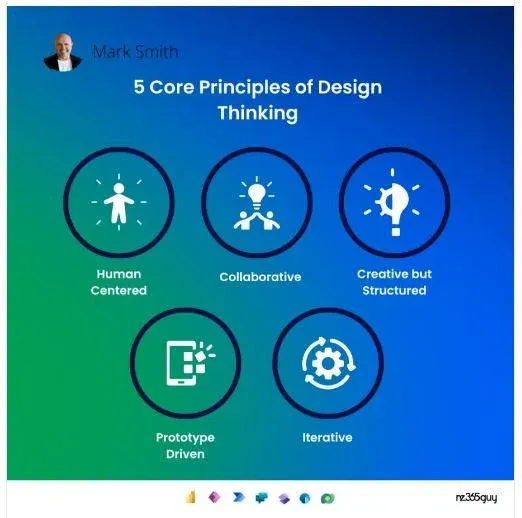
A Design Thinking approach works for both technology and physical product development. It is underpinned by five core principles:
👉Human-centred
It's about understanding the impact of solutions on people and exploring their needs and behaviours.
👉Collaborative
Involves all stakeholders - from executives to end-users, extending to customers for external impacts.
👉Structured creativity
It appears chaotic with brainstorming and post-its, but it is a controlled process for creating innovative ideas.
👉Rapid prototyping
Quickly creating and testing prototypes to ensure they meet technical, business, and user requirements.
👉Iterative
It is not a one-off process but a cycle of refining and updating as feedback is received and priorities shift.
Design Thinking ultimately ensures outcomes are aligned closely with user needs.
Is it something you use?
How do you use it?
Get in touch to find out how I can help.

Mark Smith
Principal AI Counsel · Microsoft AI MVP
Helping people build practical AI skill in the Intelligence Age.
More from nz365guy
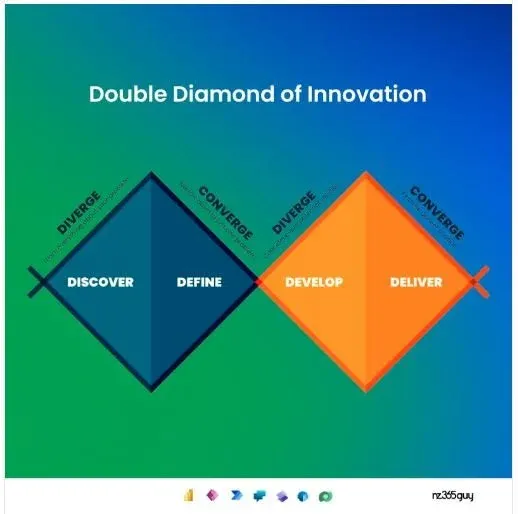
Exploring Innovation with Double Diamond
Ever come across it? 🤔 It's this brilliant framework introduced by the British Design Council in 2005, revolving around four key phases:
Microsoft’s Copilot Strategy: Turning Shared Context and Persistent Agents into Business Outcomes
Excel followed Lotus 1-2-3. Windows Server followed Novell NetWare. Xbox entered behind PlayStation but stayed in the fight long enough to earn a permanent seat at...
What Microsoft ISV Success taught me about tenant design
Microsoft ISV Success gave us useful cloud benefits, but assembling them into one clean development tenant exposed avoidable setup gaps.
Discussion
Comments
Loading the discussion for this post.
Leave a comment
Your email stays private. If it matches a Gravatar account, your public avatar can appear after the comment is approved.